

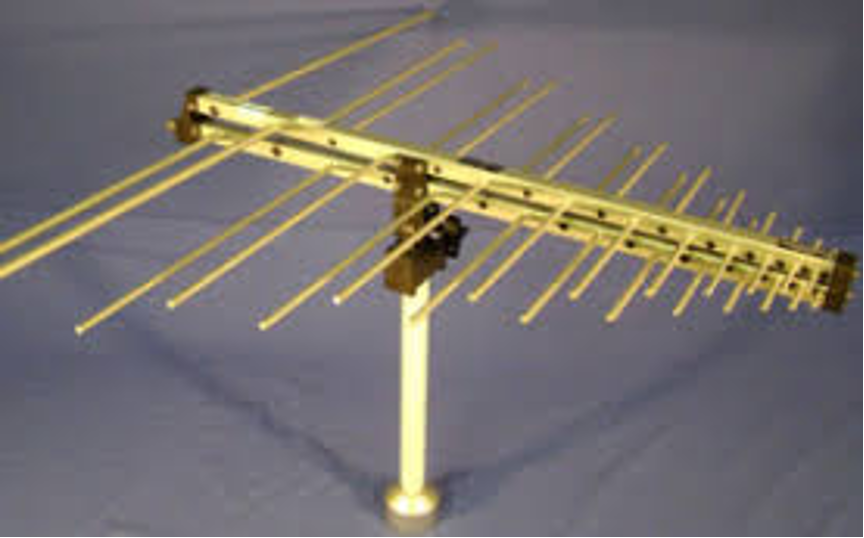
- Frequency Range: The range of frequencies over which the antenna can operate effectively.
- Gain: The measure of the antenna's ability to direct or concentrate radio frequency energy in a particular direction.
- Bandwidth: The range of frequencies within which the antenna can operate without significant loss of performance.
- Polarization: The orientation of the electromagnetic waves radiated by the antenna.
- Impedance: The resistance offered by the antenna to the flow of alternating current.
- Dipole Antenna: A simple and widely used antenna consisting of two conductive elements. It is commonly used in radio and television broadcasting.
- Monopole Antenna: A single-element antenna that is typically mounted over a ground plane. It is often used in mobile devices and vehicles.
- Yagi-Uda Antenna: A directional antenna with multiple elements, including a driven element, reflector, and directors. It is commonly used in television reception and point-to-point communication.
- Patch Antenna: A flat, rectangular antenna that is often used in wireless communication devices, such as smartphones and GPS receivers.
- Helical Antenna: An antenna that consists of a conducting wire wound in the form of a helix. It is commonly used in satellite communication and space exploration.
- Broadcasting: Radio and television broadcasting rely on RF antennas to transmit signals over long distances.
- Mobile Communication: Mobile phones and base stations use RF antennas to enable wireless communication.
- Wi-Fi and Bluetooth: Wireless networking technologies, such as Wi-Fi and Bluetooth, use RF antennas to transmit and receive data.
- Satellite Communication: Satellites use RF antennas to communicate with ground stations and other satellites.
- Radar Systems: Radar systems use RF antennas to detect and track objects by emitting and receiving electromagnetic waves.