You have seen it on almost every brand website.
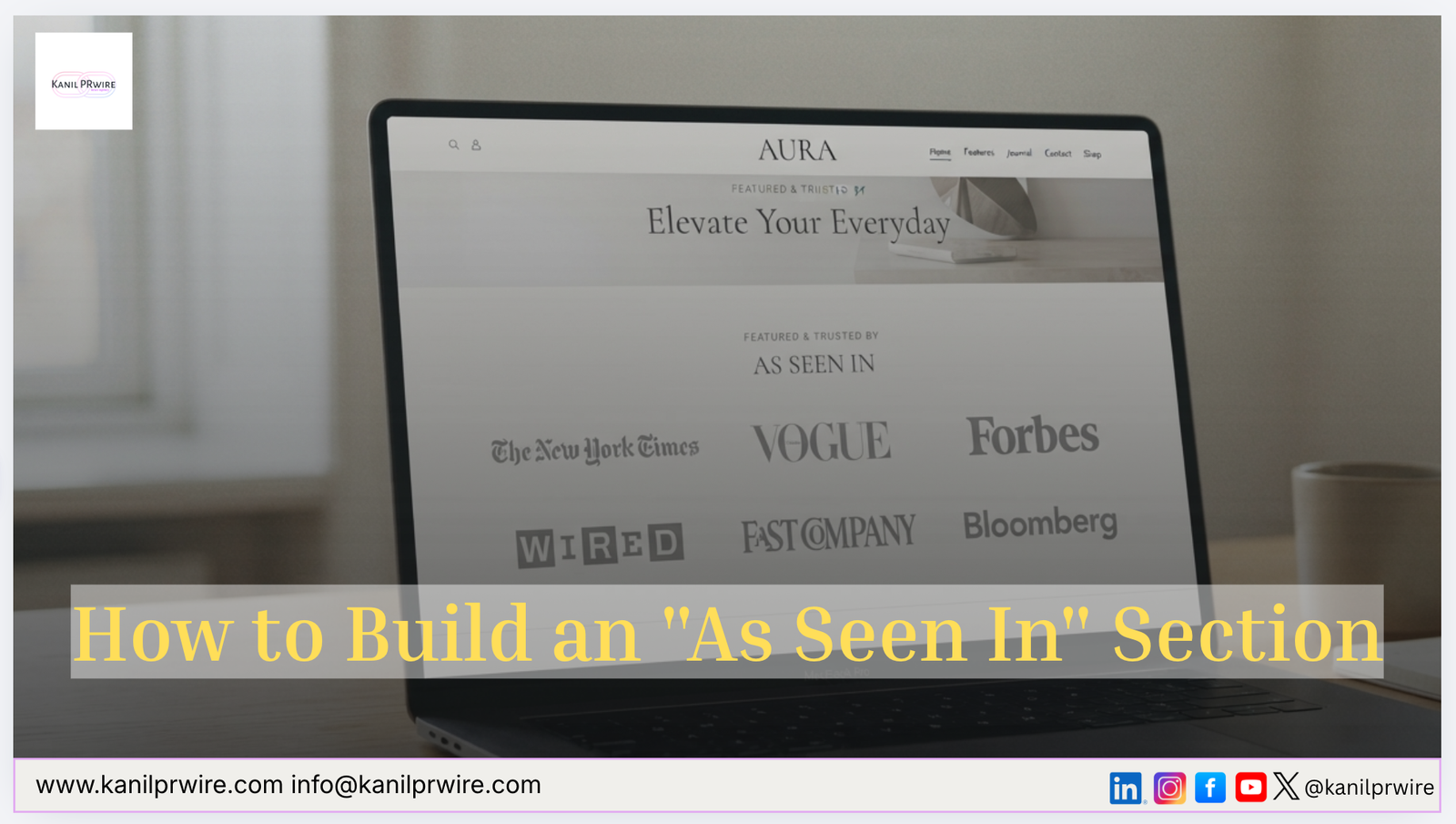
A row of publication logos sitting just below the hero section. Forbes. TechCrunch. Business Insider. The Economic Times. Sometimes with the words "As Seen In" or "Featured In" above them.
It works. When it is real.
The problem is that a lot of brands have figured out that almost any publication logo looks impressive on a website. So they fill that section with outlets nobody has heard of, platforms that accepted payment for a mention, or press release submission sites that publish anything regardless of quality.
And visitors notice. Maybe not consciously. But something feels off. The logos look unfamiliar. The coverage feels thin. And the trust that section was supposed to build quietly evaporates.
An "As Seen In" section with the wrong logos does not just fail to help — it actively undermines credibility. It signals that the brand is trying to look legitimate rather than actually being legitimate.
Here is what the real version looks like — and how to build it.
What an "As Seen In" Section Actually Does
Before getting into how to build one, it is worth understanding why it matters at all.
When a visitor lands on your website, they are making a rapid assessment. Is this brand real? Is it credible? Can I trust it?
Your own copy cannot answer those questions — because of course you are going to say good things about yourself. What answers them is third-party validation. Coverage on platforms the visitor already recognises. Publications they read, or at least know exist. The implicit signal that someone other than you has found your brand worth covering.
That is what an "As Seen In" section does when it is built correctly. It borrows credibility from platforms that have already earned it — and transfers some of that credibility to your brand.
It works for investors. It works for enterprise buyers doing due diligence. It works for first-time visitors deciding whether to trust you with their email address or their money.
But only when the logos mean something.
The Difference Between Real Coverage and Fake Coverage
This is the part most guides skip.
Real coverage means your brand was featured on a publication editorially — a journalist wrote about you, your press release was distributed and published on their platform, or your guest post appeared under your byline. The coverage exists as a live, indexed page. Someone can search for it, find it, read it.
Fake coverage — or at least coverage that does not belong in an "As Seen In" section — includes paid advertorials on low-traffic sites, press release submission platforms that publish everything automatically, and directories that list brands without any editorial process.
The test is simple. Can you share a live URL for the coverage? Does the publication have a real audience? Would a journalist or investor recognise the outlet name?
If the answer to any of those is no — that logo does not belong in your "As Seen In" section. Not because it is dishonest, necessarily. But because it does not do the job the section is supposed to do.
What Publications Actually Belong There
The logos that carry real weight in an "As Seen In" section fall into a few categories.
National news portals — platforms with established readership, strong Google indexing, and brand recognition among your target audience. When someone sees a logo they recognise from their daily news reading, the credibility transfer is immediate.
Business and finance media — publications that cover startups, funding, and industry developments. For brands targeting investors or enterprise buyers, these logos signal that the company is operating at a level worth covering financially.
Industry-specific platforms — niche publications that your specific audience reads. A health tech brand covered in a respected health media outlet carries more weight with its actual audience than a feature in a general lifestyle publication ten times its size.
International wire services — GlobeNewswire, PRNewswire, ANI, AccessNewsWire. These are the platforms that financial analysts, journalists, and institutional investors actively monitor. A logo from any of these signals that your announcement was distributed through channels serious companies use.
Regional language publications — for brands targeting specific geographic markets, coverage in a respected regional publication carries significant weight with that audience.
The common thread is audience relevance and editorial credibility. The logo should mean something to the person reading your website — not just look impressive at first glance.
How to Start Building Yours — From Zero
Here is the honest version of this answer.
You cannot build a real "As Seen In" section overnight. It is the result of consistent media activity over time — press releases distributed when there is genuine news, guest posts placed on relevant platforms regularly, branded content published across industry media.
But you can start today. And the first placement changes something important — it gives you something real to put on your website.
Start with a press release.
If you have a genuine announcement — a product launch, a funding round, a significant partnership, a milestone — a press release distributed across national news portals and business media creates immediate, verifiable coverage. One distribution can produce placements on dozens of platforms simultaneously. Each one is a live URL. Each one is a logo you can legitimately add to your "As Seen In" section.
We cover exactly how to do this properly here.
Add guest posting for authority publications.
Guest posts on industry-specific platforms produce bylined coverage — your name, your brand, on a publication your audience reads. This is editorial coverage in the truest sense. And it builds over time — twelve guest posts across relevant platforms over a year produces a "As Seen In" section that looks established because it is.
More on what guest posting actually does for brand credibility here.
Use wire services for investor-facing logos.
If you are preparing for fundraising or building enterprise credibility, GlobeNewswire, PRNewswire, ANI, and AccessNewsWire logos carry specific weight with investor and business audiences. These are the platforms that financial press monitors. Coverage here signals that your announcement was treated seriously — not just submitted to a press release directory.
We wrote about why this matters for startups specifically here.
The Compounding Effect
Here is what most brands do not think about until they are already doing it.
Every piece of coverage you earn adds to the pool. A press release today. A guest post next month. Another press release when the next milestone hits.
Six months in, your "As Seen In" section has real logos. A year in, it has enough that you can be selective — keeping only the most recognisable ones and letting the rest live as a media page.
That is when the section starts doing serious work. Not just building trust with individual visitors, but changing how the brand is perceived overall. It looks established. It looks like a brand that has been around, building, earning coverage.
Because it has. And that is the only version that actually works.
How Kanil PRwire Helps You Build It
At Kanil PRwire, every service we offer produces coverage you can legitimately add to your "As Seen In" section.
Press release distribution across 1,000+ publications — national English portals, regional language platforms, business and finance media, industry-specific sites. Guest posting on relevant publications where your audience reads. Content publishing that keeps your brand visible between major announcements. Wire syndication through GlobeNewswire, PRNewswire, ANI, and AccessNewsWire for investor-facing international coverage.
Every placement comes with a live URL. You can verify it, share it, and add the publication's logo to your website with complete confidence that the coverage is real.
Our pricing portal at pricing.kanilprwire.com shows the full publication list with direct pricing — so you know exactly what you are building toward before you spend anything.
If you want to discuss what the right starting point looks like for your brand, reach out on WhatsApp at +91-9759615049 or through our contact page.
An "As Seen In" section is not a design element. It is a trust signal.
Build it with coverage that is real, verifiable, and earned — and it does exactly what it is supposed to do.
Kanil PRwire offers press release distribution, guest posting, and content publishing across 1,000+ publications in India and internationally, with wire syndication through GlobeNewswire, PRNewswire, AccessNewsWire, and ANI. Visit kanilprwire.com or explore the full network at pricing.kanilprwire.com.