Here is something that happens before almost every investor meeting — and most founders never think about it.
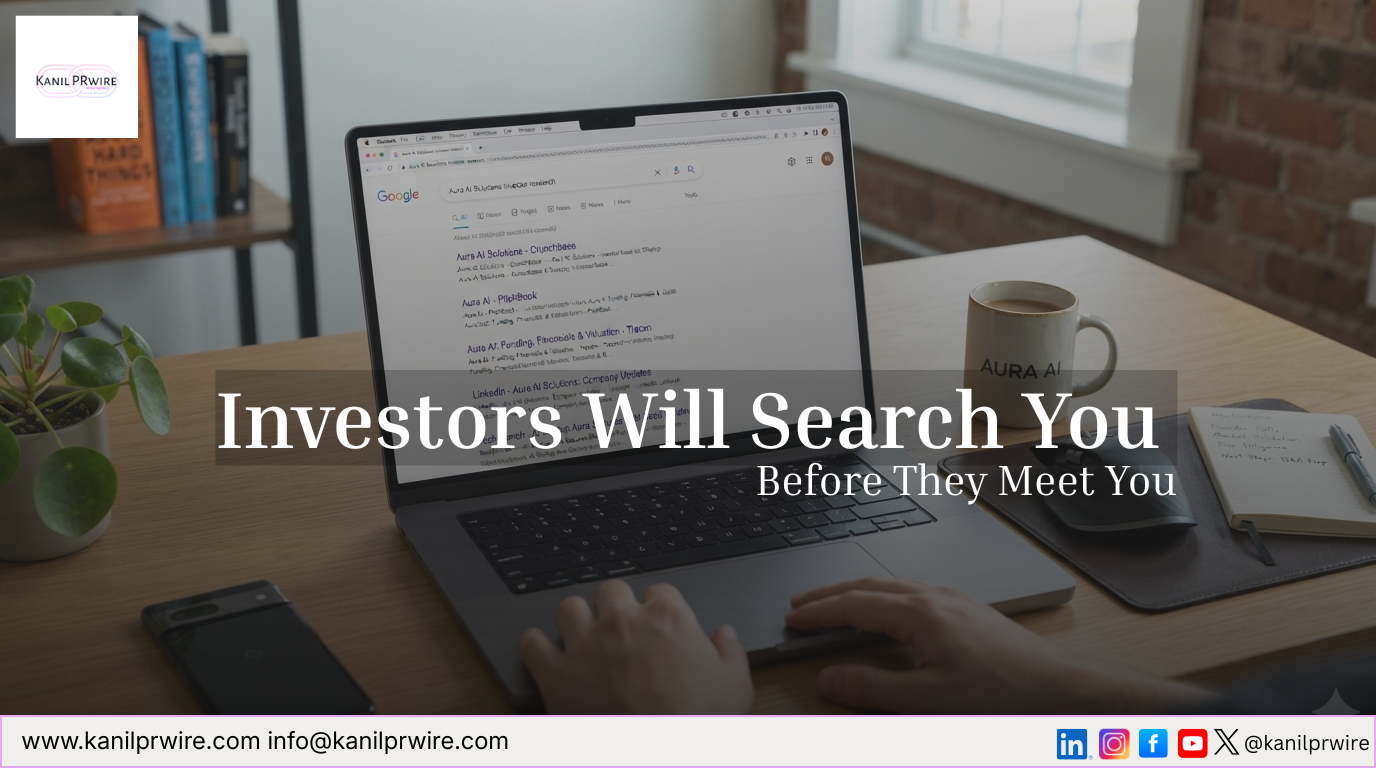
The investor opens a browser. Types your company name. And spends three to five minutes reading whatever comes up.
Not your pitch deck. Not your product demo. Whatever the internet has to say about you.
And in those three to five minutes, a perception forms. It might not be the decision — but it sets the frame for everything that follows. An investor who finds nothing walks into the meeting with a question mark. An investor who finds credible coverage on recognisable platforms walks in already a little warmer.
This is not a theory. It is just how people work. We research before we commit. Investors do it too.
The Credibility Gap Nobody Talks About
There is a gap that most early-stage startups have and almost nobody addresses directly.
You have built something real. You have a product, a team, a vision. But if someone searches your company name and finds only your own website and a LinkedIn profile — you look like an idea, not a business.
That is the credibility gap. And it does not close by itself.
Paid advertising does not close it. Social media followers do not close it. A well-designed website does not close it. What closes it is third-party validation — your brand appearing on platforms that people recognise and trust, in a context that is editorial rather than promotional.
When an investor finds a press release on a national business portal, a founder interview on an industry publication, or your company mentioned in a wire service like GlobeNewswire or ANI — something shifts. The company starts to feel established. Not because it is, necessarily. But because the signals are there.
What Investors Actually Look For When They Search You
Not every investor will articulate this, but the pattern is consistent.
They want to see that your company exists publicly — not just on platforms you control. Your own website is expected. Coverage on third-party platforms is what signals that other people have found your story worth publishing.
They want to see that you have news worth announcing. A startup that has distributed press releases about its launch, its product, its milestones — even small ones — looks like a company that is moving. A startup with no press history looks static.
They want to see consistency. One press release from eighteen months ago and nothing since raises questions. A company that has maintained a media presence over time — even at a modest frequency — looks like it has been building.
And honestly — they want to see what the internet says when they search your founder's name too. A founder with guest posts on industry publications, with quotes in relevant media, with a public presence that goes beyond their own social profiles — that founder looks like someone worth betting on.
PR Before Customers Is Not a Luxury. It Is Strategy.
Most founders treat PR as something they will get to eventually. After the product is ready. After the first customers come in. After the Series A.
But here is the catch — the time when PR matters most for credibility is before all of those things happen. When you have nothing else to point to, your media presence is what you have.
A startup with two customers and coverage on three credible platforms looks more legitimate than a startup with twenty customers and zero media presence. That is uncomfortable. But it is true.
The reason is simple. Customers are invisible to the outside world unless you tell their stories publicly. Coverage is visible to everyone who searches you — investors, potential hires, enterprise buyers, journalists, partners. It works around the clock without you being in the room.
What a Startup Media Presence Actually Looks Like
You do not need to be in Forbes to have a credible media presence. Most startups that raise successfully do not have coverage in top-tier national publications. What they have is consistent, verifiable coverage across relevant platforms.
A press release announcing the company's launch — distributed across national portals and business media. A follow-up release when the product goes live, or when a meaningful partnership is announced. A guest post from the founder on an industry platform, explaining the problem the company is solving and why now. A brand feature on a business publication that puts a human face on the company's story.
None of this requires a large PR budget. It requires knowing where to distribute, and working with a partner who has the network to make it happen.
At Kanil PRwire, we work with startups at exactly this stage. Our distribution network covers 1,000+ publications — national English portals, regional language platforms, business and finance media, industry-specific sites. For startups that need international investor visibility, we distribute through GlobeNewswire, PRNewswire, ANI, and AccessNewsWire — the wire services that financial journalists and institutional investors actively monitor.
Every placement comes with a live URL. You can share that coverage in your pitch deck, on your website, in your investor update emails. It becomes a tangible asset — not just a media mention, but proof that your story has been told publicly, by platforms other than your own.
The "As Seen In" Moment
There is a specific moment in a startup's journey when PR starts to compound.
It is when you have enough coverage that you can put an "As Seen In" section on your website. When you can drop a line in an investor email that says "we were recently featured on GlobeNewswire and covered by three national business portals." When a journalist researching your space finds your previous coverage and reaches out for comment.
That moment does not happen from one press release. It happens from consistent, targeted distribution over a period of months. But it starts with the first placement — and the first placement can happen right now, regardless of what stage your startup is at.
Where to Start
If you are a founder preparing for fundraising — or building toward it — the media presence question is worth addressing now, not later.
Start with a launch press release or a milestone announcement. Get it distributed across national business portals and wire services. Add a guest post from your team on a relevant industry platform. Build from there.
Our pricing portal at pricing.kanilprwire.com shows every publication in our network with direct pricing — so you can see exactly what a distribution plan looks like and what it costs before committing to anything.
If you want to talk through what makes sense for your startup's current stage, reach out on WhatsApp at +91-9759615049 or through our contact page.
The pitch deck matters. The product matters. The team matters.
But the search results matter too. And unlike the pitch deck — the search results are visible to everyone, not just the investors you get in front of.
Build them accordingly.
Kanil PRwire offers press release distribution, guest posting, and content publishing across 1,000+ publications in India and internationally, with wire syndication through GlobeNewswire, PRNewswire, AccessNewsWire, and ANI. Visit kanilprwire.com or explore the full network at pricing.kanilprwire.com.