Most brands planning a press release in India ask the same question.
Which national portals should we target?
Economic Times. Business Standard. Mint. Maybe a few business news platforms.
All English. All national. All metro-focused.
And all reaching roughly the same slice of India — the English-reading urban professional audience that every other brand is also trying to reach.
Here is what most brands never ask.
What about everyone else?
The Numbers Most PR Strategies Ignore
India has approximately 886 million internet users.
68% of them prefer consuming content in their native language — not English. That is not a small segment. That is the majority of the country's digital audience actively choosing Hindi, Tamil, Telugu, Bengali, Marathi, and other regional languages over English every single day.
And here is the part that should make any brand rethink their PR strategy — 88% of Indians say they trust local-language content more than English content. Not just prefer. Trust.
A press release that only goes to English national portals is reaching a segment that is well-served, highly competitive, and increasingly saturated. The brands distributing press releases in regional languages are reaching audiences that most competitors have never even considered targeting.
That gap is an opportunity. And most brands are leaving it wide open.
Why Regional Coverage Converts Differently
This is the part that surprises most brands when they first see the data.
Regional media coverage does not just reach more people. It often converts better than national English coverage.
Think about it this way. When someone reads about a brand in a publication they have read every day for years — in the language they think in, with references to places and experiences they recognise — the brand does not feel like a distant corporate announcement. It feels relevant. Personal. Worth paying attention to.
A national English publication feels like news from somewhere else. A respected regional publication feels like news from home.
That difference in perception translates directly into behaviour — more website visits, more search activity, more genuine brand consideration. Regional coverage is not consolation coverage when national media does not respond. For large parts of India, it is the more powerful channel.
What India's Regional Media Landscape Actually Looks Like
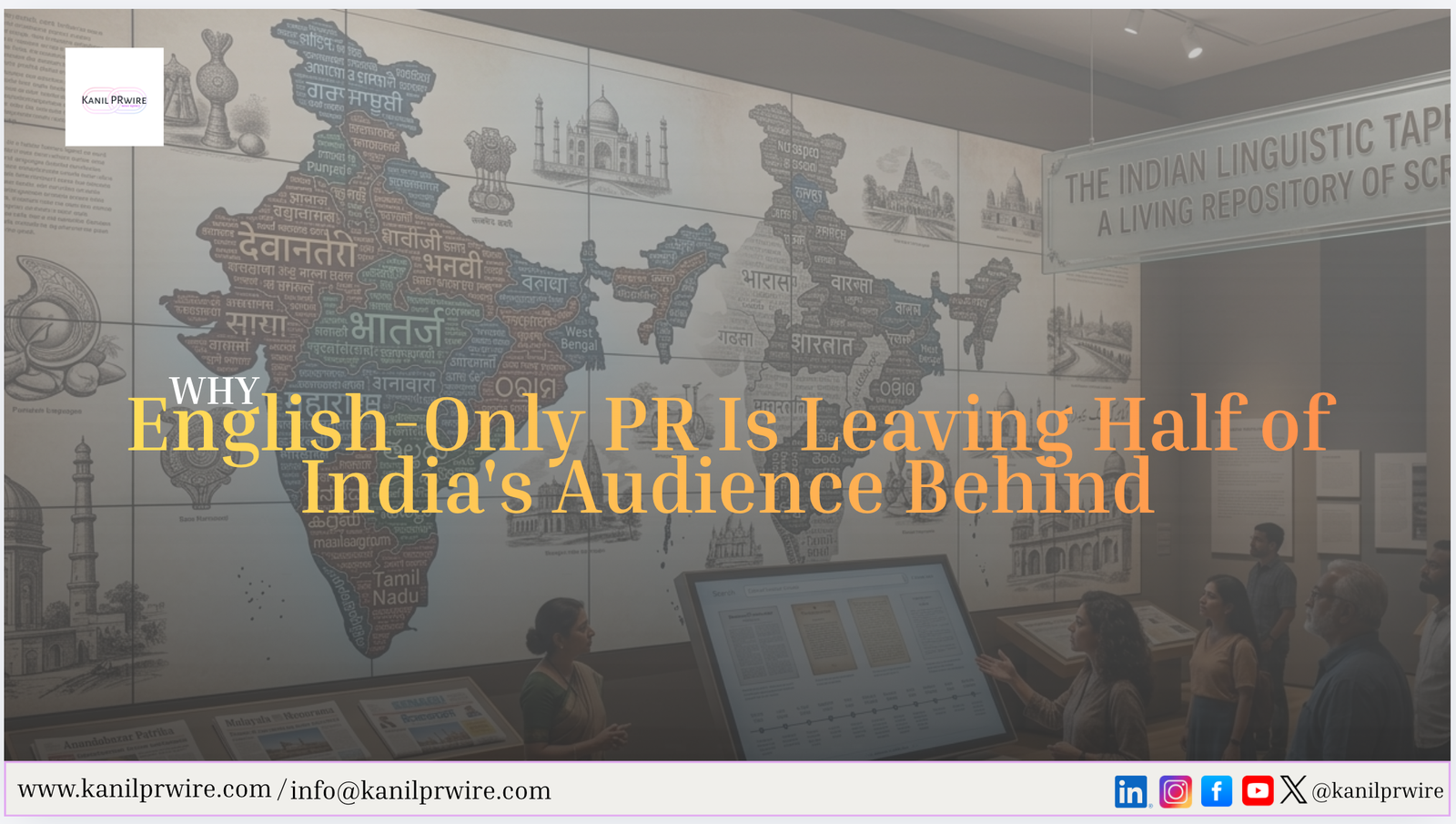
India does not have one regional media market. It has dozens.
Hindi language media alone reaches across Uttar Pradesh, Bihar, Madhya Pradesh, Rajasthan, Uttarakhand, and more — states that collectively represent a significant portion of India's population and consumer market. Hindi publications range from massive national dailies with regional editions to purely digital portals covering specific states and cities.
Tamil media reaches one of India's most economically active markets — Tamil Nadu — with a digital audience that is highly engaged and deeply loyal to local platforms. The same is true for Telugu media across Andhra Pradesh and Telangana, Bengali media across West Bengal and Bangladesh-adjacent audiences, and Marathi media across Maharashtra.
And that is before considering Kannada, Malayalam, Gujarati, Punjabi, Odia — each with its own established digital media ecosystem, its own audience, and its own trust dynamics.
A brand that distributes only in English is not reaching any of these audiences in the format they prefer or in the context they trust.
When Regional PR Matters Most
Not every press release needs regional language distribution. But there are specific situations where it matters enormously — and skipping it leaves real opportunity on the table.
Product launches targeting non-metro markets. If your product is designed for audiences in Tier 2 or Tier 3 cities — or even if it is not, but those audiences represent significant growth potential — a press release in relevant regional languages reaches them in a way English coverage simply does not.
D2C brands building pan-India presence. A D2C brand trying to build awareness beyond metro cities needs to show up in the media those audiences read. Regional language distribution is often the most cost-effective way to do that at scale.
Startups from regional markets. A startup based in Pune, Chennai, or Hyderabad has natural credibility in regional media that a Mumbai or Delhi-headquartered brand might not. Regional press coverage establishes that local identity and builds trust with the audience closest to the brand's roots.
Any brand entering a specific state or region. If you are launching in Tamil Nadu, distributing your press release in Tamil media is not an add-on — it is the primary channel for reaching your actual target audience there. English national coverage of a regional market entry often means very little to the people in that region.
The Tier 2 and Tier 3 Opportunity
Here is something the data makes very clear.
Rural India — cities and towns outside the major metros — now accounts for 55% of India's entire internet population. And it is growing at double the rate of urban areas.
These audiences are not on the English-language internet in the same way. They are on YouTube watching regional language content. They are reading news apps in Hindi and Tamil. They are forming opinions about brands based on what they see in regional media — not in the Economic Times.
A brand that builds media presence in these markets now — through consistent regional language PR — is building something that most competitors have not even started thinking about. The audience is large, it is growing, and it is significantly less contested than the national English media space.
We covered why consistent media presence compounds over time here. The same logic applies to regional markets — brands that show up early and consistently build presence that is very hard for late entrants to displace.
How Regional Language Distribution Actually Works
The practical challenge most brands face with regional PR is not motivation — it is execution.
Finding Hindi news portals, Tamil publications, Telugu platforms — researching each one, identifying contacts, pitching in the right language and format — this is a significant operational challenge for any brand team without an existing regional media network.
At Kanil PRwire, regional language publications are built into our core distribution network. Our inventory includes Hindi, Tamil, Telugu, Bengali, Marathi, and other regional language platforms alongside national English portals, business media, and industry-specific sites.
When you distribute a press release through Kanil PRwire, you can choose the regional language mix that matches your target geography — whether that means all of India's major regional languages or specific states and markets relevant to your announcement.
Every placement — regional or national — comes with a live URL. You can see exactly which regional publications covered your story, verify the content, and use those placements in your "As Seen In" section or investor materials.
The full publication list, including regional language outlets and their pricing, is available at pricing.kanilprwire.com.
A Simple Way to Think About It
If your press release only goes to English publications — you are competing with every other brand for the same audience, on the same platforms, in the same language.
Regional language distribution changes that equation. You are reaching audiences your competitors are not reaching, on platforms they are not on, in a format those audiences trust more.
That is not a consolation prize. That is a significant competitive advantage — and most brands are not taking it.
If you want to discuss what regional language distribution looks like for your next announcement, reach out on WhatsApp at +91-9759615049 or explore our publication network at pricing.kanilprwire.com.
Most brands are competing for the same English-speaking audience.
The rest of India is waiting.
Kanil PRwire distributes press releases across national English portals, regional language publications including Hindi, Tamil, Telugu, Bengali and Marathi, and international wire services. Transparent pricing at pricing.kanilprwire.com. Every placement verified with a live URL.