Ask a marketer why they do guest posting and the answer is almost always the same.
Backlinks.
And they are not wrong — guest posting does produce backlinks. Good ones, when done correctly. The kind that search engines pay attention to. But here is the thing that most people miss.
The brands getting the most out of guest posting are not primarily thinking about links. They are thinking about something that is harder to measure but far more valuable — trust.
What Guest Posting Actually Is
At its simplest, guest posting means publishing an original article on someone else's platform under your brand's name or a named author from your team.
The host publication gets fresh editorial content. Your brand gets visibility, a byline, a link back to your site, and — most importantly — exposure to an audience that already trusts the platform they are reading on.
That last part is what most people underestimate.
When someone reads your content on a platform they already rely on, they do not arrive as a cold prospect. They arrive as a warm reader. The platform's credibility has already done some of the work. Your brand shows up in a context that signals — this perspective is worth reading.
That is not a backlink. That is trust transfer. And trust is what actually drives the outcomes brands care about — customers who convert, investors who take meetings, partners who say yes.
The Backlink Is a Byproduct, Not the Goal
Here is a way to think about it.
If you write a genuinely useful guest post on a relevant industry platform — one that teaches something, offers a perspective the audience has not encountered, or solves a real problem — three things happen.
The platform's audience reads it. Some of them visit your website. Some of them become leads.
Search engines index the backlink. Your domain authority improves over time. Your own content starts to rank better.
And anyone who later searches your brand name finds that article — on a platform they recognise — which tells them your brand is credible and worth paying attention to.
The backlink is part of that picture. But it is the third benefit, not the first.
Brands that treat guest posting purely as a link-building exercise write content designed to include a link. Brands that treat it as authority-building write content designed to be useful — and they get the link as a natural consequence. The difference in outcomes is significant.
What Makes a Guest Post Actually Work
Not every guest post delivers results. The ones that do share a few things in common.
The publication actually matters to the audience.
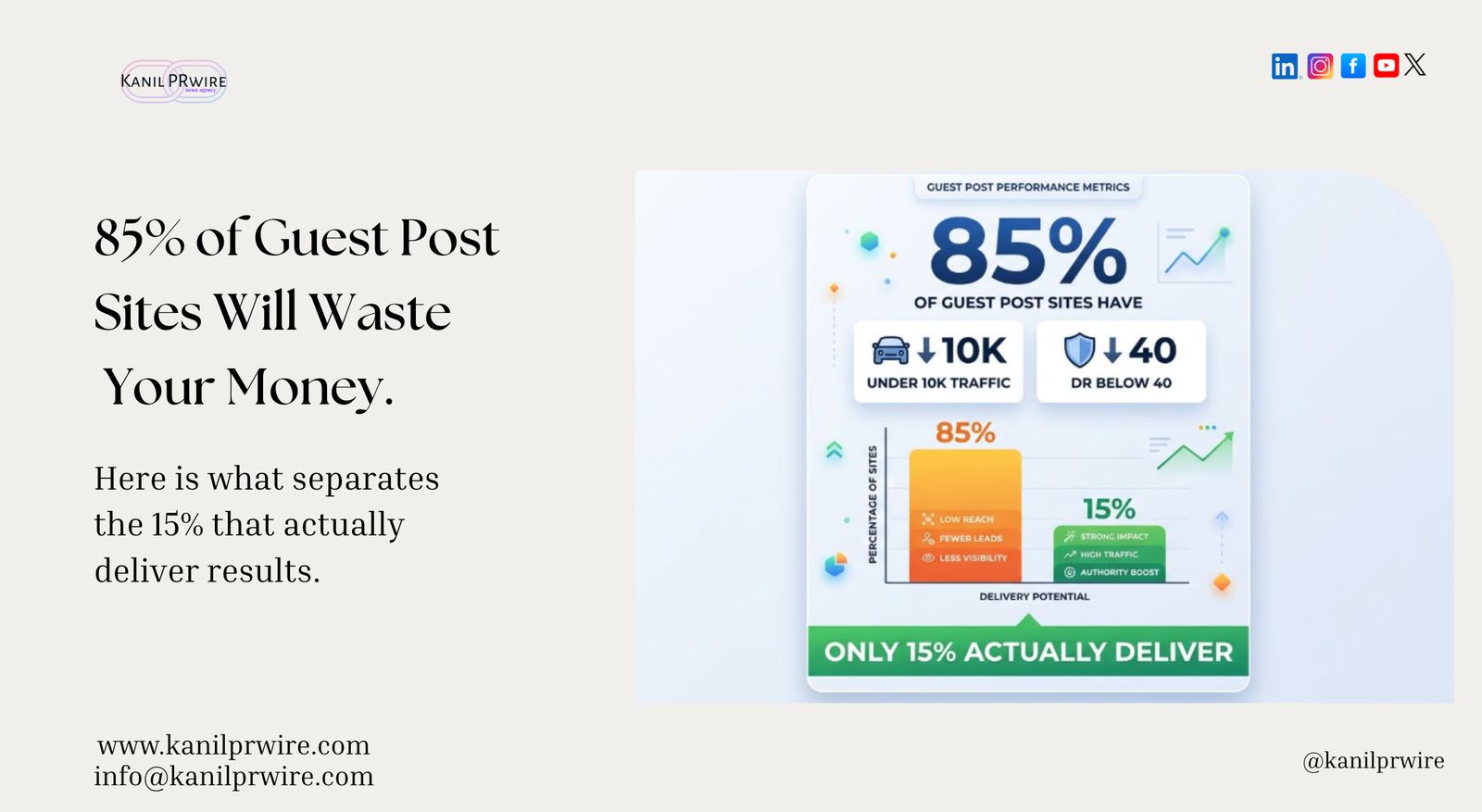
A guest post on a platform your target customers read delivers real results. A guest post on a platform with high domain authority but no relevant audience delivers a backlink and almost nothing else. Relevance beats metrics every time.
Think about it this way — if your ideal customer would not naturally come across that publication in their daily reading, the guest post is not reaching them. It is reaching search engines. That has some value, but it is not the full picture.
The content provides genuine value.
Guest posts written to include a link are obvious to editors and to readers. Publications with editorial standards worth caring about reject them. Publications that accept them usually have audiences that do not engage.
Content that teaches something specific, that offers a perspective the publication's audience has not seen before, that answers a question the audience is actually asking — this content gets accepted, gets read, and gets remembered.
It is done consistently.
One guest post does something small. You reach a new audience once, earn one backlink, and add one item to your brand's media presence.
Twelve guest posts on relevant platforms over six months builds something qualitatively different. Your brand name appears in the spaces your industry occupies. People encounter you in multiple contexts. Search engines see a pattern of consistent, relevant citations. Journalists researching your space find you cited repeatedly.
That is when guest posting starts to compound — and compounding is where the real value lives. We wrote about this in more detail here.
Who Guest Posting Actually Helps
Guest posting is not the right tool for every situation. But it is exactly right for a few specific ones.
Startups building credibility before traction. When you have limited customers and a short operating history, a bylined article on a relevant industry platform does something your own website cannot — it puts a third party's credibility behind your brand. Investors, potential customers, and journalists who find that article see something independent. We covered why this matters in detail here.
Brands competing in crowded spaces. When every competitor is running the same ads on the same platforms, showing up editorially — as a voice in the conversation rather than an advertiser — creates a different kind of visibility. It is harder to achieve than paid reach, which is exactly why it is more valuable.
B2B brands with long sales cycles. Enterprise buyers do not convert from a single ad. They research extensively before engaging. A brand that appears consistently in the publications their buyers read — as a thought leader, not an advertiser — influences that research phase in ways that performance marketing cannot.
Any brand that wants to build lasting SEO authority. Guest posting on relevant platforms builds the kind of backlink profile that search engines reward over time. Not overnight. But consistently, over months, in a way that compounds rather than decaying.
What Brands Get Wrong About Guest Posting
A few patterns consistently undermine results.
Choosing platforms by domain authority alone. A high-DA site with no audience overlap with your niche delivers a technically strong backlink and almost nothing else. Always evaluate audience relevance alongside technical metrics.
Treating it as a one-time campaign. Guest posting as a strategy requires consistency. Brands that do two or three posts, see modest results, and stop are measuring the wrong timeframe.
Writing for the link rather than the reader. If the content would not be genuinely useful to the publication's audience without the link, it is not good enough. The content is the product. The link is the receipt.
Not verifying where the content actually appeared. Every guest post placement should come with a live URL — an actual page on the actual publication where your article has been published and indexed.
How Kanil PRwire Handles Guest Posting
At Kanil PRwire, guest posting is one of our three core services — alongside press release distribution and content publishing.
Our network includes 1,000+ publications across national news portals, regional language platforms, business and finance media, and industry-specific sites. When a brand comes to us for guest posting, we identify the publications that genuinely fit their niche and target audience — not just the ones with the highest domain authority numbers.
Every placement comes with a live URL. You can see exactly where your content appeared, share it with your team, and use it in investor decks, on your website, or anywhere else your brand's media presence matters.
Our pricing portal at pricing.kanilprwire.com shows available publications with direct pricing — so you know what you are getting before you commit to anything.
If you want to discuss which publications make sense for your brand's specific goals, reach out on WhatsApp at +91-9759615049 or through our contact page.
Guest posting works. But not primarily because of backlinks.
It works because showing up consistently in the right places — with content that is genuinely useful to the audience already there — builds the kind of trust that no advertisement can manufacture.
The backlink is what search engines notice. The trust is what converts.
Kanil PRwire offers guest posting, press release distribution, and content publishing across 1,000+ publications in India and internationally. Visit kanilprwire.com or explore the full network at pricing.kanilprwire.com.