Every week, brands publish blog posts that nobody reads. They write founder stories that sit on a website nobody visits. They put together detailed guides, industry insights, and thought leadership pieces — and then wait for an audience that never shows up.
The content is good. Sometimes it is very good. But good content and visible content are two completely different things. And confusing the two is one of the most common and costly mistakes brands make in their marketing.
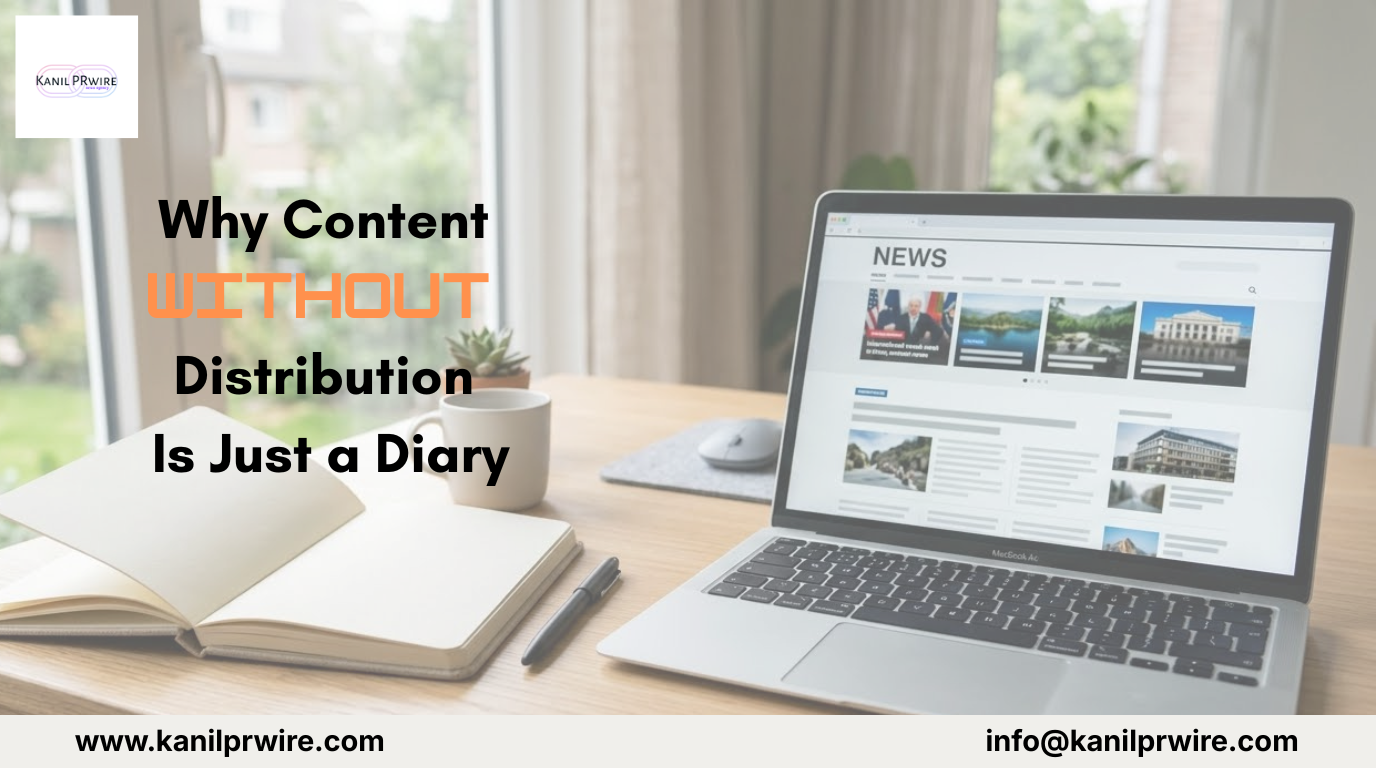
The uncomfortable truth is simple: content without distribution is just a diary. It might be meaningful. It might be well-written. But if only you can see it, it is not doing any work for your brand.
The Content Trap Most Brands Fall Into
Here is how it usually goes.
A brand decides to invest in content. They hire a writer or brief an agency. Blog posts start going up — one a week, maybe two. The content covers relevant topics, answers real questions, and is genuinely useful to anyone who finds it.
The problem is that almost nobody finds it.
Website traffic trickles in. A few people from the team share it on their personal LinkedIn. The founder reposts it once. And then the next piece goes up and the cycle repeats — more content published, same small audience seeing it.
This is the content trap. The assumption is that publishing equals reach. It does not. Publishing on your own website reaches the people who are already looking for you. Distribution is what reaches everyone else — and everyone else is where your growth actually comes from.
The brands that break out of this trap are not necessarily producing better content. They are producing content that travels. They are putting their ideas and their brand name in front of audiences that have never heard of them — on platforms those audiences already trust.
What Distribution Actually Means
Distribution is not just sharing a post on social media. That helps, but it is limited by your existing follower count and platform algorithms that are increasingly hostile to organic reach.
Real content distribution means getting your content published on third-party platforms that have their own established audiences. It means your article, your press release, your brand story appearing on a news portal, an industry publication, or a business media site that people are actively reading — not because they searched for you, but because they were already there.
This is a fundamentally different kind of reach.
When someone finds your content on your own website, they already had some reason to look for you. When someone finds your content on a publication they trust, you are reaching them cold — and the fact that you are appearing in a place they trust transfers credibility to your brand immediately.
That credibility transfer is the core value of content distribution. It is not just about reach. It is about reaching people in a context that makes them more likely to trust and remember you.
The Three Channels That Move Content Off Your Website
There are three primary distribution channels that consistently work for brands looking to expand their content reach beyond their own platforms.
Press Release Distribution
A press release is the most direct form of content distribution. You have a story — a product launch, a funding round, an expansion, a milestone, a partnership — and you need that story to reach journalists, editors, and readers who cover your space.
Press release distribution takes that story and places it across news portals, business media, and industry publications simultaneously. When done well, the same announcement appears across dozens of credible platforms within hours — each placement indexed by search engines, each one building the brand's digital footprint.
The mistake brands make with press releases is treating them as one-off announcements. The brands that benefit most are the ones that distribute consistently — building a steady presence in media rather than appearing once and disappearing.
Guest Posting
Guest posting moves your original content — your insights, your expertise, your perspective — onto platforms your audience already reads.
Unlike a press release, which announces news, a guest post builds authority over time. A well-written article published on a relevant platform positions your brand as a credible voice in your industry. Readers who encounter your content in a trusted editorial context develop a different relationship with your brand than those who find you through an advertisement.
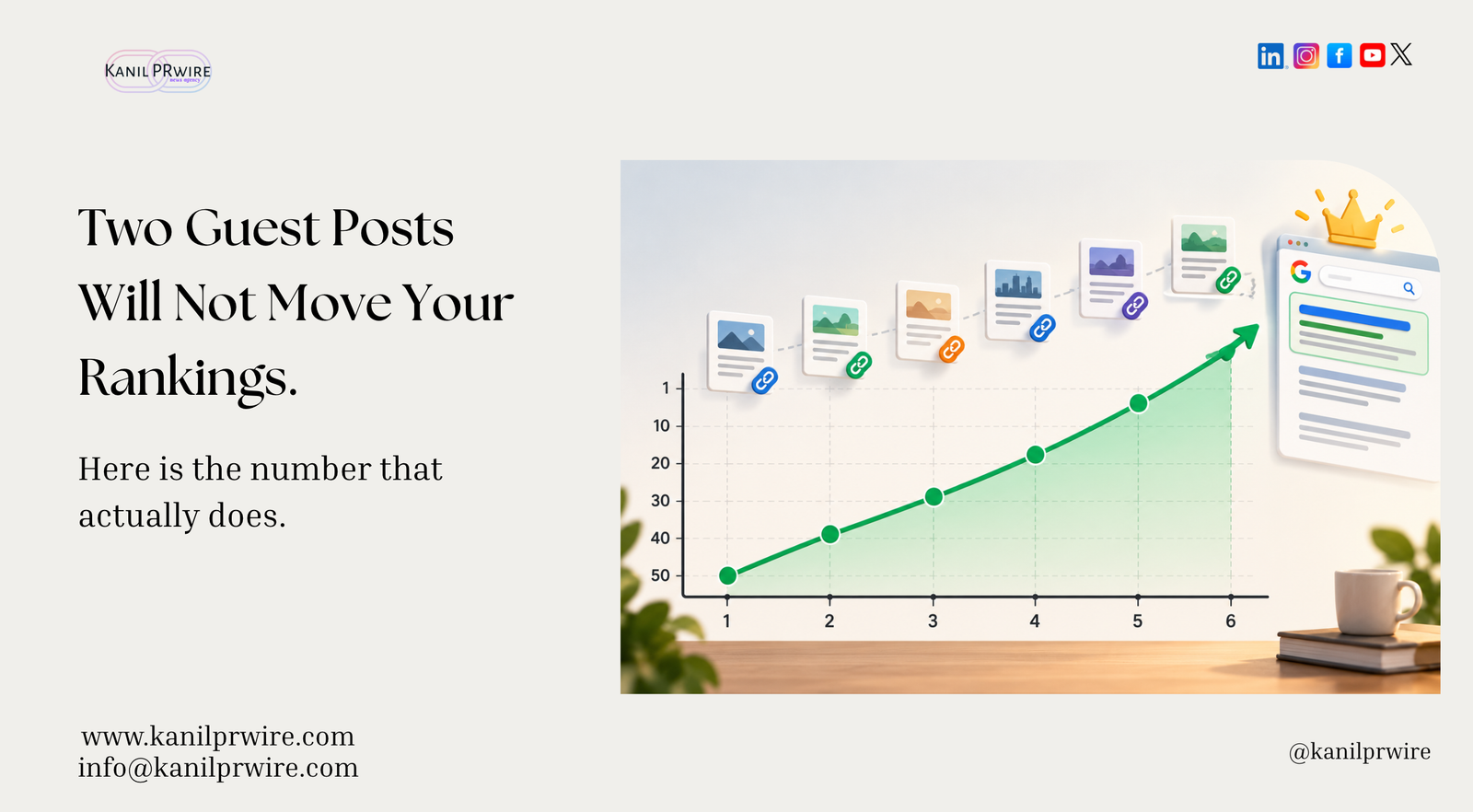
The SEO value is significant too. A guest post on an established platform earns a backlink that strengthens your website's search ranking. Over time, consistent guest posting creates a compounding effect — more authority, better rankings, more organic traffic.
Content Publishing and Syndication
Beyond press releases and bylined guest posts, there is a broader category of content publishing — brand features, sponsored editorial, product roundups, thought leadership articles — placed across a network of relevant platforms.
This kind of content publishing keeps your brand name consistently visible across the web. It is not built around a single announcement or a single article. It is built around sustained presence — showing up regularly in the places your audience reads, so that over time your brand becomes familiar before the audience even needs what you offer.
Why This Matters More in India's Media Landscape
India has one of the most diverse and fragmented media landscapes in the world. National English publications, Hindi news portals, regional language platforms, business media, industry verticals, hyperlocal sites — the audience is spread across all of them, consuming content in different languages and different formats.
A brand that only publishes on its own English-language website is reaching a fraction of the potential audience — and often not the most relevant fraction.
Distribution across a mix of national, regional, and industry-specific platforms changes this. A startup in Pune can get coverage in Hindi business media that reaches decision-makers in cities the brand has never directly marketed to. A D2C brand can appear on regional platforms in the language its target customer actually reads in.
This is not hypothetical. It is what consistent, targeted distribution actually produces — a brand presence that extends well beyond the geography and language of the brand's own content.
What Happens When You Distribute Consistently
The results of consistent content distribution are not always immediate. A single press release or a single guest post does not transform a brand's visibility overnight. What builds over time is harder to see in a single week but impossible to ignore after six months.
Search engines begin to associate your brand name with credibility. Backlinks from established publications improve your domain's authority. People searching for solutions in your space start encountering your brand across multiple platforms — not just on your own website. The cumulative effect is a digital presence that feels established, credible, and trustworthy.
The brands that seem to be everywhere in their industry — the ones that appear in search results, in media roundups, in recommendations from journalists and industry voices — are almost never the brands that got lucky with one viral piece. They are the brands that distributed consistently, over a long enough period, that presence became their natural state.
How Kanil PRwire Fits Into This
At Kanil PRwire, distribution is the entire business.
We maintain a network of 1,000+ publications across national news portals, regional platforms, business media, industry-specific sites, and international outlets. Brands that work with us are not just publishing content — they are distributing it across a network that took years to build.
Our three core services — press release distribution, guest posting, and content publishing — each address a different dimension of the distribution problem. A press release gets your news in front of journalists and readers immediately. A guest post builds long-term authority in your niche. Content publishing maintains consistent brand visibility across the web.
Every placement comes with a live URL. You can see exactly where your content appeared, verify it yourself, and share it with your team, investors, or clients.
The full list of publications in our network, along with pricing for each placement, is available at pricing.kanilprwire.com. There are no bundled packages that hide what you are paying for. You choose the platforms that make sense for your brand and your audience.
Final Thoughts
Content creation without distribution is an investment that does not return what it should. The effort goes in. The results stay hidden. And the brands that are winning visibility in your space are not necessarily producing better content — they are producing content that travels.
Distribution is not an optional add-on to a content strategy. It is the part that makes the strategy work.
If you are creating content and not distributing it, the first step is deciding which distribution channel fits your current goal — awareness, authority, or search visibility. The second step is building the infrastructure to do it consistently.
If you want help with that second step, reach out to us on WhatsApp at +91-9759615049 or explore our publication network at pricing.kanilprwire.com.
Kanil PRwire offers press release distribution, guest posting, and content publishing across a network of 1,000+ publications in India and internationally. Visit kanilprwire.com to learn more.